
Having primary custody of a child can be reassuring if you do not believe the other parent is fit to be their caregiver. In some cases, however, you may wish to pursue the termination of the non-custodial parent’s rights altogether. This process may arise if your child would be endangered if the other parent continued to have parental rights or if the non-custodial parent chooses to voluntarily terminate their rights so that a step-parent or other party can legally adopt the child.
Working with a San Mateo family law attorney can help you understand how to pursue the termination of parental rights of a non-custodial parent in California and whether this process may be successful in your case.
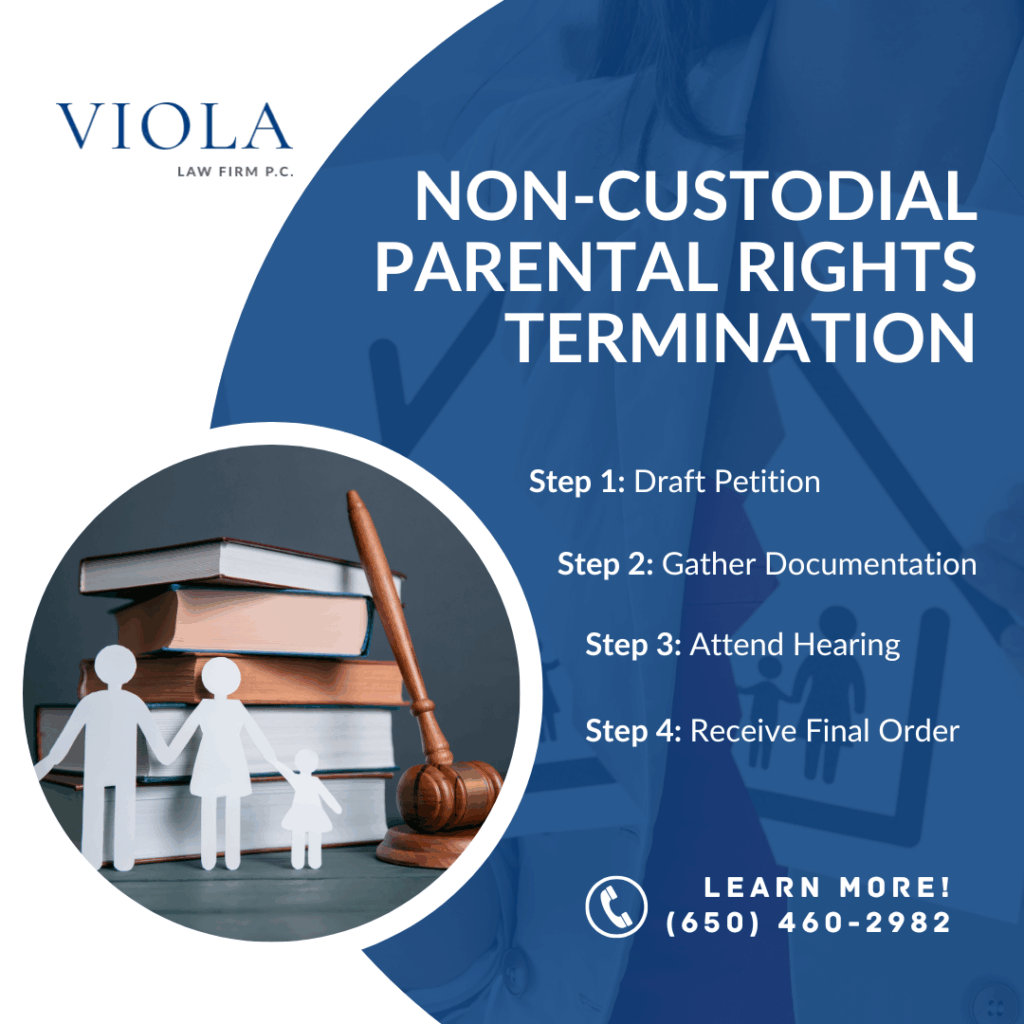
Step 1: Draft a Court Petition To Terminate Parental Rights
One of the first legal steps to end parental rights is drafting a custom petition. A family law attorney can help you create this petition under California law.
The petition should generally cover your reason for wanting to end parental rights and whether this is voluntary, meaning the parent agrees to give up their rights, or involuntary, meaning they have not consented.
California recognizes several types of child custody and allows parents to still have visitation rights even if they do not have custody. If the decision is involuntary, you will want to include the reasons you believe the child’s other parent is no longer fit to have any parental rights.
California’s Family Code recognizes these legal grounds:
- Abandonment
- Neglect or cruelty
- Parent convicted of a felony
- Parent declared mentally ill or developmentally disabled
- Parent impaired by consistent abuse of alcohol or controlled substances
Step 2: Include Supporting Documentation for Involuntary Terminations
If the non-custodial parent has not consented to terminate their parental rights, you will need to provide supporting documentation to demonstrate why you believe they are no longer fit to be in the child’s life. This documentation may include:
- Records of missed visits
- Criminal history
- Proof of unpaid child support
- Evidence of failed reunification efforts
- Evaluations from mental health professionals showing relevant concerns
Certain documentation can also be helpful for voluntary cases, such as a proposed adoption plan.
Step 3: Attend a Termination Hearing With the Court
A hearing is typically necessary to determine the final ruling in family court parental termination cases. A judge will consider the evidence, hear both sides, and determine whether the case meets the legal standard under California parental rights laws. Your attorney will represent you through this hearing.
Step 4: Receive the Final Order
Finally, the judge will determine whether to approve or deny the termination, and the court will issue a formal judgment. If the order is approved, this judgment will end the parent’s legal rights and allow another party to file for adoption, if applicable.
Seek Legal Support From Viola Law Firm, P.C.
If you are wondering how to terminate the parental rights of a non-custodial parent under California’s child custody laws, Viola Law Firm, P.C., can provide clarity and support. Schedule a consultation today by calling 650-343-6400.